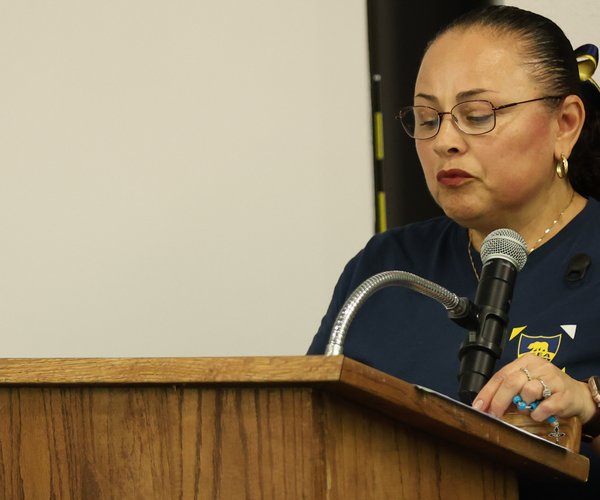
When Brittney Clark, a librarian at Orestimba High, attended an AFL-CIO Convention at Philadelphia Convention Center in June 2022, she thought that she was only going to connect with other union organizers. But that was far from what happened.
As she sat in a conference room with more than 2,000 attendees, an individual walked inside in front of the audience, Chris Gardner. Gardner, a businessman who’s betrayed in the biopic, “Pursuit of Happyness,” spoke about his career as a stockbroker and encouraged high school graduates to enter an apprenticeship program.
As Clark flew back to California, she felt there wasn’t an initiative “to encourage kids to kind of look into other career options that might not come with college debt.” This led her to approach then-Principal Justin Pruett about offering and encouraging trade skills career paths such as agriculture, emergency services and welding through a career fair. Pruett supported the idea and approved it.
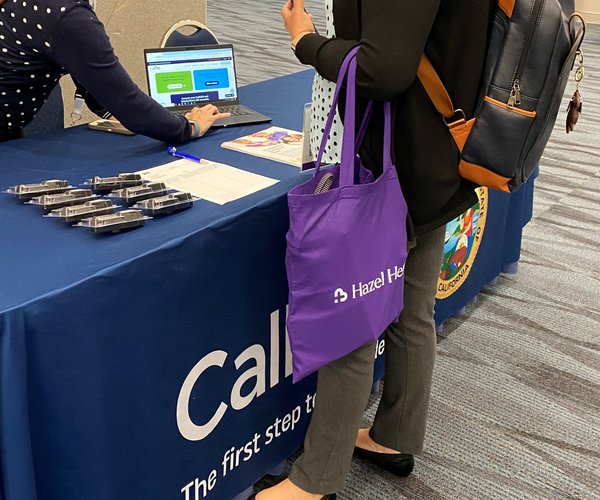
After working with staff members from Stanislaus County of Education, a career fair was held at Kerry McWilliams Memorial Gymnasium on Feb. 17, 2023. The inaugural event brought in more than 30 organizations, including Newman Fire Department, Gallo Winery and Westside Ambulance, and around 1,000 students attended, a headcount that exceeded Clark’s expectation.
“It was shocking to really experience it the first time. We’re like, ‘Oh okay, this matters. Like this is important,’” she said.
Some students, who were initially unsure about their plans post high school, left the event with an understanding of what they wanted to pursue after graduation, Clark added.
The event, since then, has been a yearly success as the fourth annual career fair will be held on Feb. 23 at the school’s gymnasium from 8 a.m. to 1:30 p.m.
This year’s event will have 43 vendors, ranging from local tattoo shops to trade schools. In recent years, more students have gone to Universal Technical Institute with the interest of becoming diesel mechanics or tractor technicians, Clark said.
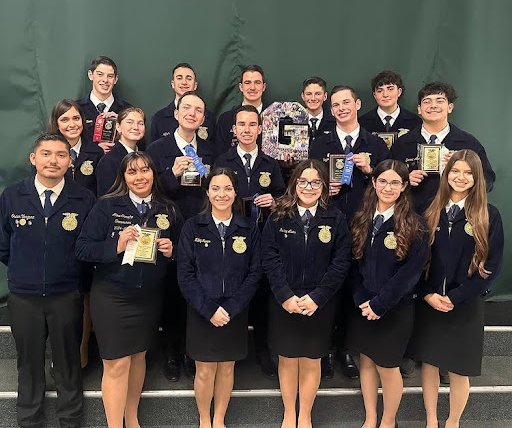
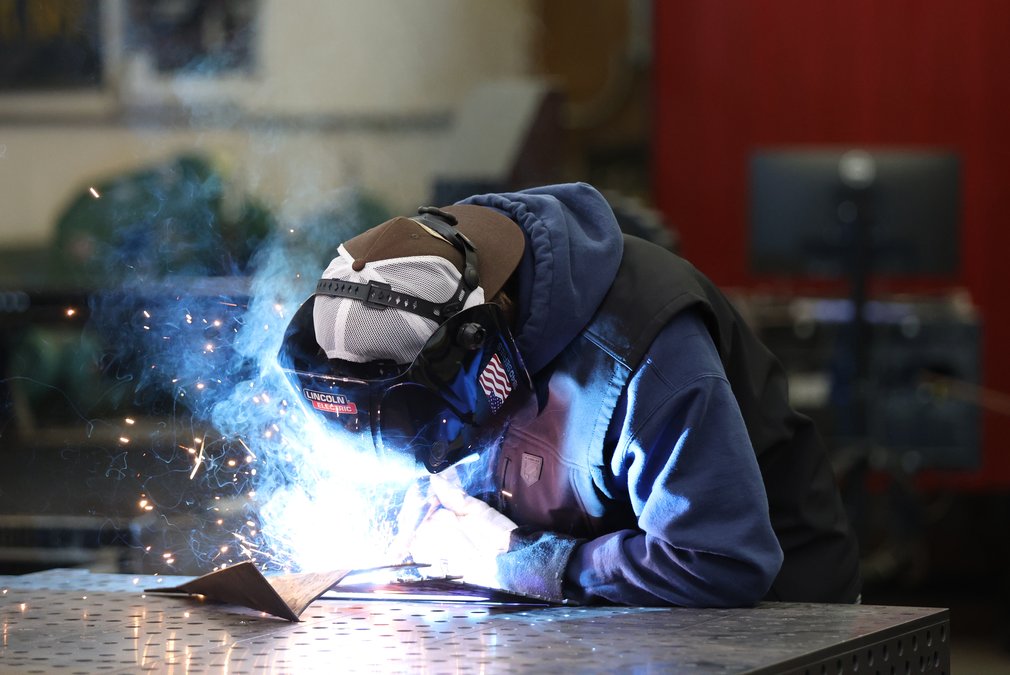
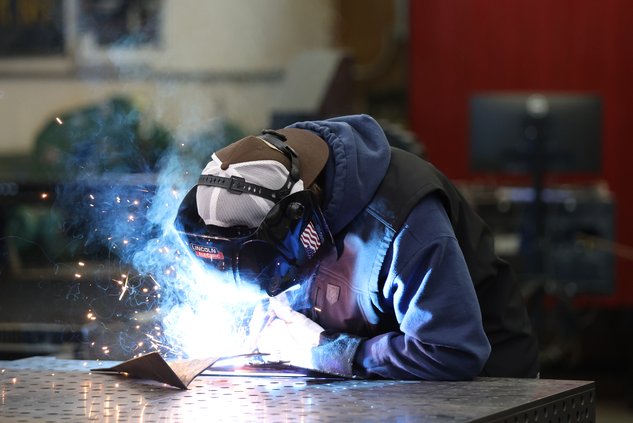
Helping alongside Clark is Kevin McGuire, an agriculture teacher at Orestimba. McGuire teaches an agriculture wielding course that focuses on five skilled trades: woodworking, plumbing, electrical, sheet metal and cold metal. Students start out in an intermediate-level course before moving into an advanced welding course.
Currently, McGuire is focusing on metal fabrication where students can build custom trailers, barbeque and farming equipment. The idea is to not only help students understand how to plan a project, but to provide a glimpse of what they’re expected to do as an agricultural mechanic, McGuire said.
“I want my students to be able to see what production work looks like because right now we do a lot of custom [fabrication],” he said. “And that’s what they’re probably expected to do when they go to work.”
With the job fair approaching, McGuire said he wants his students to know that they “can be successful or more successful financially by going to a trade school, looking for on the job training or entering into an apprenticeship.”
As more high school graduates enter the workforce, there’s been more of an emphasis on which career path to pursue. One-third of Americans recommended the graduates to enter trade school instead of going to college last year, according to a survey conducted by the American Staffing Association.
As companies line up inside the gymnasium for potential hires, McGuire said he advised his students to not focus solely on the salary, but what’s provided in their compensation package from medical benefits to vacation time.
“You have to look at a compensation package as a whole because you can’t just look at it by the dollars,” he said. “They don’t think about that when they’re in high school.”