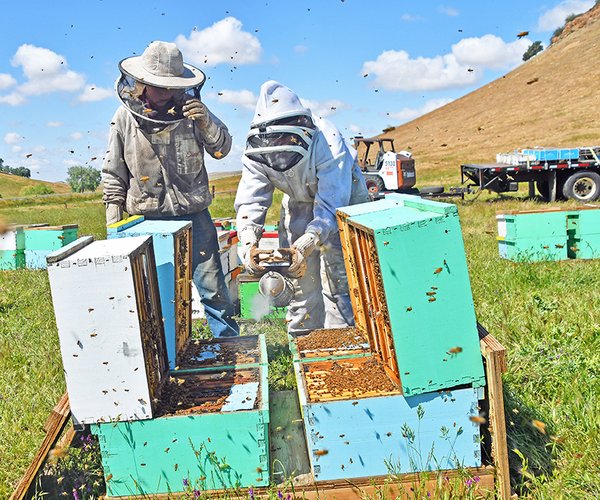
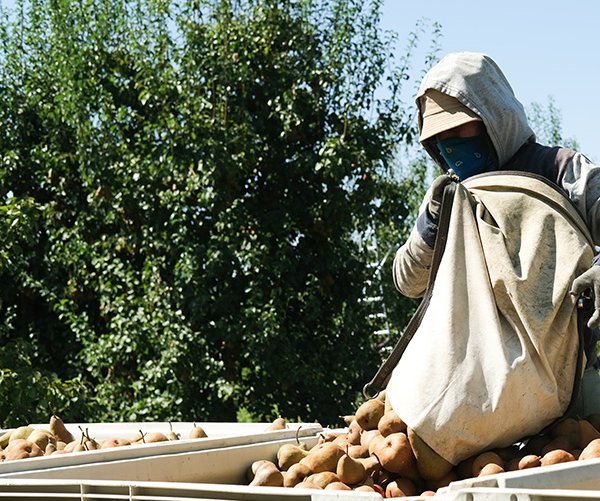
WASHINGTON — Rep. Adam Gray (D‑Merced) was one of seven Democrats to join 27 Republicans in advancing the Farm, Food, and National Security Act of 2026 out of the House Committee on Agriculture and toward a full vote in the House of Representatives.
Commonly known as the Farm Bill, the multiyear law governs a wide range of agricultural and food programs that are essential to growers and producers across the Central Valley.
“I am proud to represent one of the world’s largest agricultural regions,” said Gray, whose 13th Congressional District includes portions of Turlock. “That’s why I am committed to delivering bipartisan results for Valley farmers, ranchers, dairymen, and their families. Committee passage of this Farm Bill is an important first step to ensure that our agricultural communities have the resources, support, and certainty they need to continue to feed families across the country.”
The legislation would expand risk‑management tools for farmers, protect American‑grown commodities, and support precision agriculture and emerging technology. It also strengthens research and development for specialty crop growers, doubles funding for the Market Access Program, the Foreign Market Development Program, and the Technical Assistance for Specialty Crops program. Additional provisions establish a specialty crop advisory committee, expand procurement programs, and improve the Specialty Crop Block Grant Program.
Rep. Angie Craig (D‑Minn.), the ranking Democrat on the committee, criticized Republicans for supporting food‑assistance cuts and for not opposing the Trump administration’s tariff policies recently struck down by the Supreme Court.
“Republicans picked the winners for new investment in the ‘big ugly bill’ and decimated Title 4 outside of regular order,” Craig said. “Now, they are refusing to invest new money in many farm programs that have stagnated after nearly a decade of inflation. This bill delivers what no one is asking for: the status quo.”
During markup, the committee unanimously approved two amendments Gray offered on behalf of Central Valley farmers:
- Require the U.S. Department of Agriculture to report to Congress on how changes to, or the expiration of, the U.S.–Mexico–Canada Agreement would affect the agriculture industry.
- Allow states to allocate up to 20% of their Emergency Food Assistance Program funding to the USDA Department of Defense Fresh Fruit and Vegetable Program, enabling states to purchase locally grown fresh produce.
Gray also secured a commitment from committee Chairman Glenn Thompson (R‑Pa.) to pursue billions in assistance for specialty crop growers through a future government funding bill. Specialty crop producers in the Valley have faced significant challenges over the past year due to trade uncertainty, rising input costs, and weakened market competition.
“These programs lead to a more effective and sustainable agriculture system and ultimately support our local communities,” said Caitie Diemel, executive director of the Stanislaus County Farm Bureau.
“By backing a bill that strengthens export promotion, improves disaster and risk‑management tools for tree crops, and invests in research, conservation, and precision agriculture, Congressman Gray is helping safeguard paychecks for farmworkers, growers, processors, and transportation workers who all depend on a competitive, resilient almond industry,” said Alexi Rodriguez, CEO of the Almond Alliance.
Sen. John Boozman (R‑Ark.), the ranking member of the Senate Agriculture Committee, has indicated he plans to introduce his own version of the farm bill in the coming months. If both chambers pass their bills, lawmakers will negotiate a final version to send to President Donald Trump.