By Caleb Hampton
Ag Alert
California cling peach growers face an uncertain future after long-term contracts worth more than a half-billion dollars in total were voided by Del Monte Foods, which filed for bankruptcy in July.
In August, the major canned foods company exercised its right under federal bankruptcy law to reject its contracts with members of the California Canning Peach Association, which represents about 70% of the state’s cling peach growers. In some cases, the contracts were signed this year and valid through 2044.
Del Monte’s rejection of peach contracts has left several dozen growers without a future buyer for their fruit, exposing some to steep losses should they fail to recoup the upfront cost—typically several thousand dollars per acre—of developing their orchards.
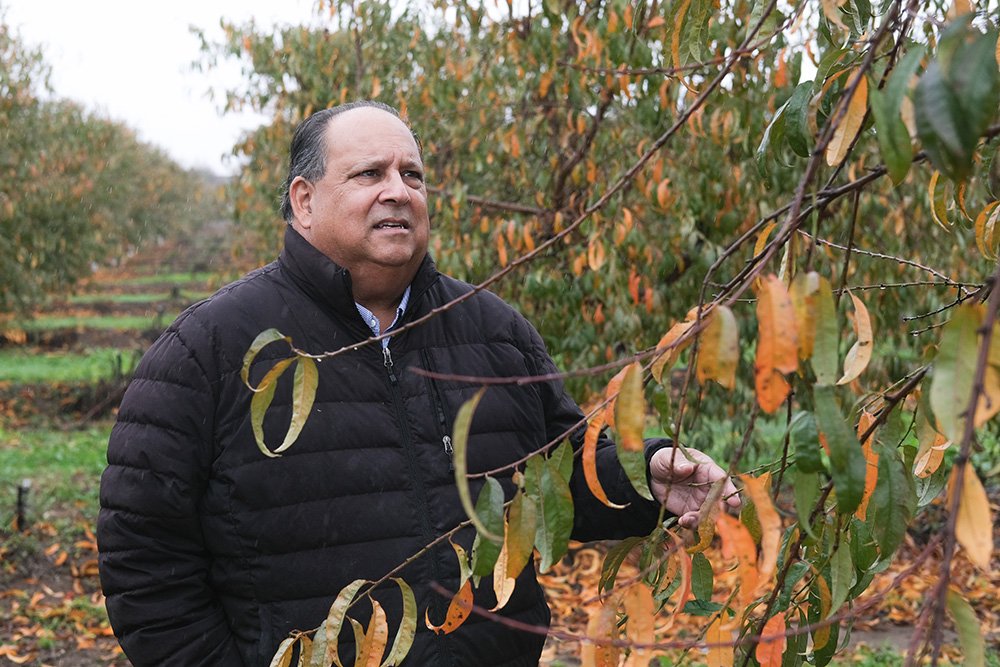
“It’s a very delicate situation,” said Sutter County farmer Ranjit Davit, who chairs the peach association’s board of directors. “A lot of growers are affected.”
In recent years, Del Monte, which is based in Walnut Creek, contracted about 35% of California’s cling peaches, while Lodi-based Pacific Coast Producers contracted about 60% of the crop, with the rest purchased by a few smaller processors.
During the pandemic, demand for canned foods soared as more people ate at home. Del Monte responded by increasing production, making long-term commitments with peach growers and other suppliers. The new contracts caused a surge in peach plantings during the past few years, but the market soured before many of those trees produced their first piece of fruit.
The reversion of consumer habits to prepandemic trends left Del Monte “locked into excessive volume commitment,” Michael Sirota, managing partner at the law firm Cole Schotz, said on behalf of the company in a court filing, adding that Del Monte’s assets would be worth more to a potential buyer without the “burdensome” peach contracts.
Growers typically plant cling peach orchards only after securing contracts with processors that last 20 years, roughly the orchard’s lifespan.
Richard Lial, a third-generation peach grower in San Joaquin County, said losing his contracts with Del Monte “could turn out to be devastating.”
A couple years ago, Lial tore out a productive almond orchard to plant 50 acres of peaches under an agreement with the company.
“It took me two years to clean up the old orchard and plant a new orchard,” said Lial, who planted the peach trees and finalized his contract with Del Monte earlier this year. “Now, I’m sitting here without a contract.”
Peach trees do not produce at full capacity until they are at least 4 years old, and it can take close to a decade for growers to pay off their initial investment. Those left without contracts fear they may never make that money back.
“It’s a pretty big hit,” Lial said. “It’s basically a total loss if we don’t get somebody to come in and purchase the fruit.”
During the past three years, in which cling peach plantings roughly quadrupled, the peach association cautioned processors against contracting too much new acreage on the basis of pandemic-driven demand.
“We repeatedly warned them” to not over-contract, Davit said.
Del Monte did not respond to requests for comment from Ag Alert®.