BY Christian De Jesus Betancourt
Merced Focus
Sebastian Sanchez, California’s Deputy Secretary for Agriculture and Immigrant Workforce, stopped in Merced last week to meet with local organizers and hear directly from the people who work with farmworkers every day.
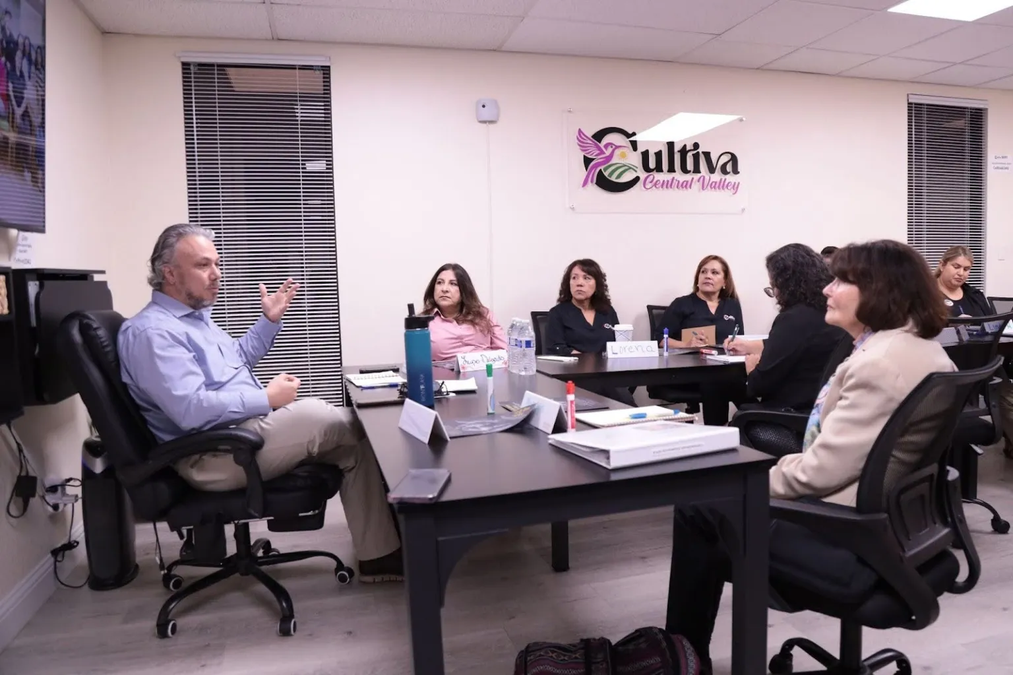
Sanchez met with about 12 community leaders at the offices of Cultiva Central Valley on M Street.
Representatives from NAMI Merced County, United Farm Workers Foundation, United Way of Merced County, Cultiva Greatness, and Zócalo Health, among others, joined the conversation.
For more than an hour, Sanchez broke down the state programs meant to protect and support immigrant and farmworker families.
He also listened to those present and took notes that he referred to as people asked questions.
Bottom of Form
He discussed the California Workplace Outreach Project, which supports nearly 90 community groups in educating workers about their rights through trusted messengers.
“This is an investment of over $50 million in working on a trusted messenger model,” Sanchez said. “We know we need to work with folks that have the trust of the community in order to be able to effectively educate the community.”
He explained how the Rural Strategic Engagement Program builds on that work by bringing “one-stop” clinics into small towns, allowing workers to receive help from multiple state agencies in one location.
“This is the work that we’ve been doing over the past five years,” Sanchez said, “trying to remove the obstacles that farmworkers and other workers have in accessing the services that we are legally and statutorily mandated.”
Sanchez also shared the state’s plan for a “No Wrong Door” policy, which means workers should never be turned away or bounced between agencies.
If someone calls the wrong office, staff must take their info and connect them to the right team, he added.
Sanchez highlighted Immigration Services for Farmworkers, which ensures that farmworkers who interact with state enforcement know they can speak with a state-funded immigration attorney.
The SEED program, Sanchez explained, trains and helps fund individuals without work permits who want to start small businesses by using an individual taxpayer identification number, or ITIN. The state has invested almost $40 million in that effort.
On job training, Sanchez outlined the Farmworker Advancement Program, which provides funding for classes in English, math, and digital skills to help workers advance in agriculture or transition into new fields.
He also noted the Employment Training Panel, which sends money directly to employers to help upskill current workers.
Sanchez said the state’s outreach efforts are only practical when local groups collaborate and share their on-the-ground observations.
“The purpose of CWOP is to build regional collaboration so we can get a complete picture,” he told the group. “I need to have that complete picture, and the only way I can have it is if there’s coordination. Be creative in how you do outreach. Tell us what works and what we should be trying.”
After the meeting at Cultiva, Sanchez visited the Merced County Office of Education’s Migrant Ed team, the SMART Program at Merced College, and the Central Valley Opportunity Center. He also planned a meeting with a local farm labor contractor.
The tour was organized by the Merced County Workforce Development Board on behalf of the California Workforce Development Board.