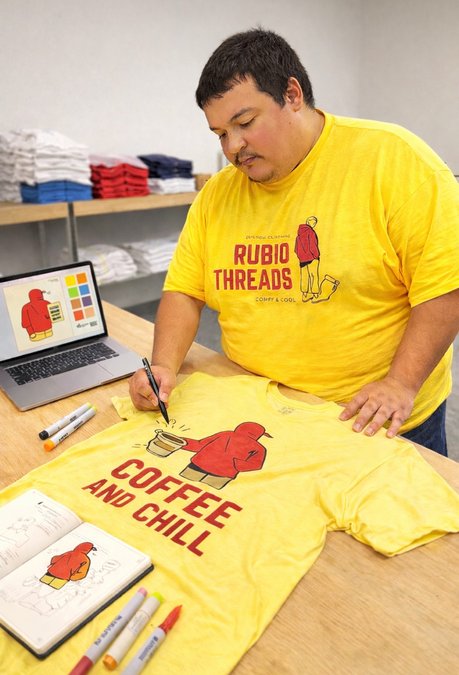
As artificial intelligence continues to seep into nearly every industry, small businesses on the Westside are weighing how to use the technology without losing the craftsmanship and personal touch that define their work. In the custom apparel world, AI is creating new opportunities for speed and creativity — and raising familiar questions about what happens to the artists behind the designs.
For James Rubio, owner of RubioThreads in Los Banos, the shift has been impossible to ignore. Rubio, who designs and prints custom shirts for customers across the Westside, said AI has become a practical tool as more people request highly personalized or even single‑shirt orders.
AI‑generated imagery allows small shops to produce visual concepts in minutes, giving customers a quick look at their ideas before a design ever hits the press. Rubio said the technology has helped streamline the early stages of the creative process, cutting down the hours once spent building a design from scratch.
For customers, that means faster mockups and quicker turnaround times. For small businesses, it can mean staying competitive in a market where speed increasingly matters. Rubio said AI can also help spark ideas or provide a visual starting point that a human designer can refine.
But he’s quick to point out that the technology has limits — and that the heart of the craft still belongs to the people doing the work.
Rubio said the industry should be cautious about allowing AI to overshadow real artists, printers and craftspeople. Shirt designers often do far more than create graphics; they run presses, select materials and ensure the final product meets the standards customers expect. Technology may help, he said, but it cannot replace the experience and intuition that come from years of hands‑on work.
Rubio believes the future lies in balance. AI can support creativity, he said, but it cannot replicate the personal connection between a designer and a customer — understanding a vision, making adjustments and producing a finished product that feels intentional.
As AI continues to evolve, RubioThreads and other small Westside shops are navigating how to use the technology responsibly. For many, the goal is not choosing between innovation and tradition, but finding a way for both to coexist — preserving the artistry of custom apparel while embracing tools that help local businesses thrive.