After much anticipation and waiting, the Newman Environmental Wetland System (NEWS) project could finish by Spring 2027, according to Public Works Director Thomas Spankowski.
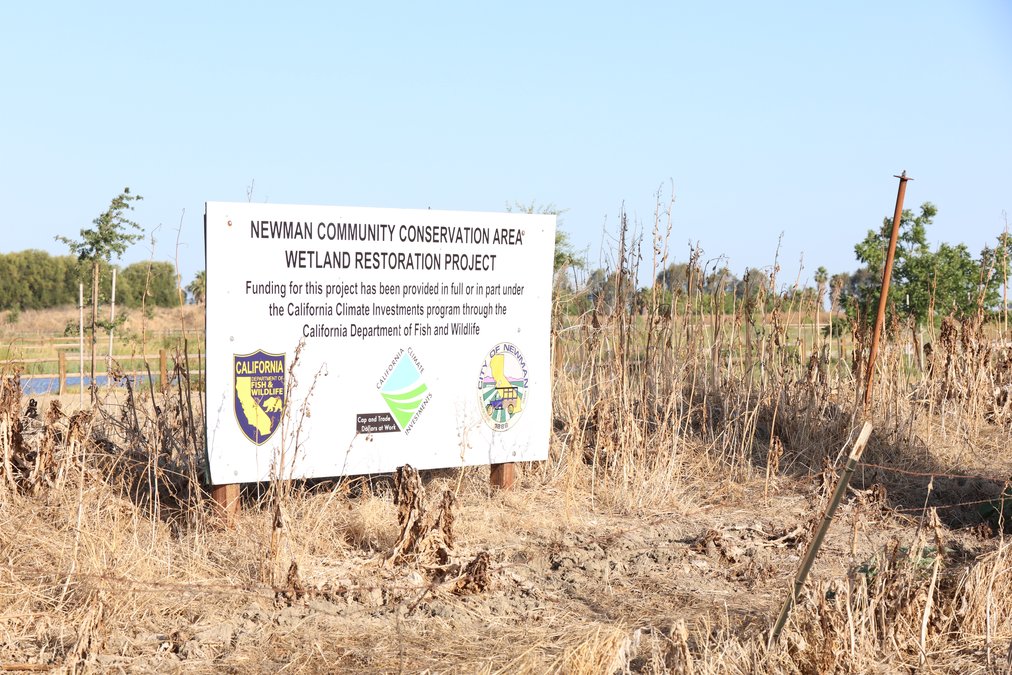
Located southeast corner of Canal School Road and Inyo Avenue on an undeveloped 78-acre parcel of city-owned land, the 21-acre constructed treatment wetland that will treat Newman’s untreated stormwater before its discharge to the Newman Wasteway and delivery to the San Joaquin River. Additionally, it will also help increase groundwater supply to the Delta-Mendota Subbasin and reduce urban and agricultural pollutant loads.
Currently, the project is 90% completed with a final report outlining the project’s details along with a community outreach to inform residents of the final tasks, Spankowski said. He added that the deadline to submit the report to the California State Water Resources Control Board is Dec. 31, 2026.
“Our goal is to open it by spring of 2027,” Spankowski said.
Newman received $8.2 million in funding from Proposition 1 Stormwater grants from the California State Water Resources Control Board, according to the California Natural Resources Agency. The project’s construction was declared completed by the City Council in March 2025 after it began nearly two years prior. It cost $313,755.25 and was worked on by Atwater-based Rolfe Construction Inc.
It's one of four ventures in the Newman Community Conservation Area Master Plan. The plan is a framework focused on habitat restoration, project development and a multi-use trail system that will provide public access, nature viewing and offer recreational and educational opportunities such as “living lab” for K-12 and college students in the Newman area and beyond.
The other three projects are the Miller Ditch Treatment, an 11-acre wetland restoration project and the Newman Nature Park. The ditch treatment, a collaborative effort with UC Merced, focuses on treating agricultural supply and tailwater from Miller Ditch.
The city’s nature park will have amenities including an unpaved multi-use trail, restrooms and drinking fountain and parking for vehicles and bicycles. It will be located at the southeast corner of Brazo Road, Spankowski said.
Spankowski said there has been excitement from residents and city officials on the wetlands treatment being open publicly. One of the benefits of NEWS is its accessibility, specifically for attendees to walk around and see the water basin, he added.
“It is set up in a way that it allows for the public to do some pedestrian-based activities, like walking or hiking,” Spankowski said. “There’s discussion on if we’ll allow animals out there, like dogs, but because it can be considered a sensitive area for animals … the ultimate goal is for the public [and] community to be able to use it as an outdoor area.”
As city staff prepare to complete a draft of the final report, Spankowski said the wetland treatment is “a relatively unique project for our area of California.”
“The ultimate goal is the use is for stormwater treatment, but the additional use of it for the community is allowing for nature-based access along with educational aspects of it,” he said.