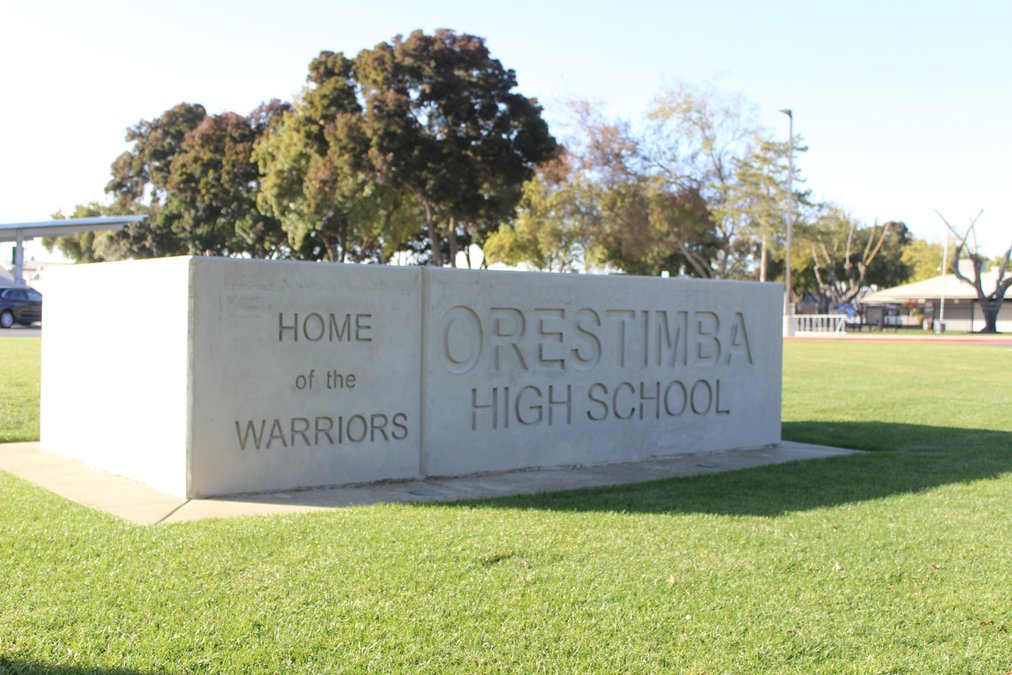
Orestimba High School will keep its “Warriors” nickname following a California law that went into effect on July 1.
Assembly Bill 3074, known as the California Racial Mascots Act, was signed into law in 2024 and required all California public schools from using derogatory Native American terms as its athletic team names, mascots and nicknames. Some of terms prohibited include but are not limited to are: Big Reds, Braves, Chiefs, Apaches, Chieftains, Chippewa, Comanches, Indians, Savages, Tribe and Squaw.
The bill is an expansion of Assembly Bill 30, which was signed into law in 2015 and prohibited schools from using the “Redskins” term for its nickname. California became the first state in the nation to ban the racial slur Redskins as a school or team name or mascot in 2015 under the initial California Racial Mascots Act. By 2017, schools were prohibited from using the term.
The updated law bans a list of terms for Native Americans, adding to the already-prohibited Redskins and capturing others with language that notes derogatory terms are “not necessarily limited to” those included in the bill.
A school can use the prohibited terms for its nickname or mascot if it receives “written consent from a locally federally recognized tribe to use a derogatory Native American term for the school or an athletic team name, mascot or nickname,” according to the bill.
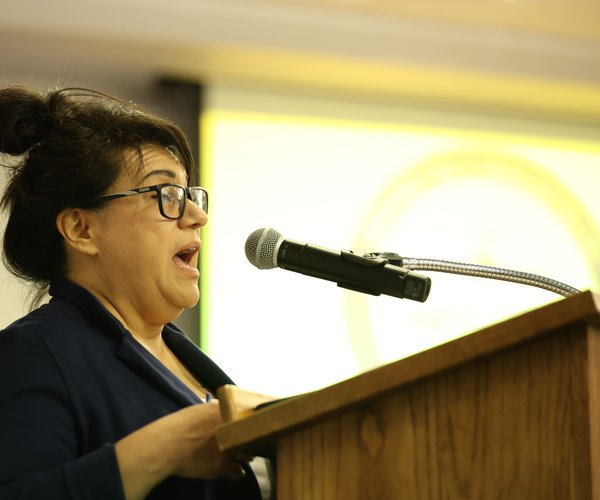
The matter was addressed in a PowerPoint Presentation presented by Assistant Principal Renae Chance during a NCLUSD Board of Education meeting on March 9.
In preparation of the legislation going through, Chance presented a plan of what’s being done at Orestimba High to the Board of Trustees. She said the school would continue to use its “O” logo and maintain its nickname.
But since the school’s learning outcome,”One School, One Tribe,” uses one of the prohibited terms, a new word will be added ahead of the 2026-27 school year. The new language of the learning objective has not been revealed.
“We wanted to move forward with the best intentions with this law,” Chance said at the meeting. “But we are the Orestimba Warriors and that is not changing.”
OHS will also exclude using any headdress, human characteristics and imagery on printed material and social media, Chance said. While much is expected to change with the new law, Orestimba can maintain its chief logo in the center of Kerry McWilliams Memorial Gymnasium. Chance said the bill recognizes long-standing traditions, and that the logo would still remain until it is replaced.
In addition to the changes, Orestimba High also removed its core values from its website: “One school; One TRIBE; Have PRIDE.”
In a phone interview with the Westside Connect, Chance said that Stanislaus County District Supervisor Channce Condit and Newman Mayor Casey Graham “are working with some groups to receive an authorization letter,” but nothing has happened at this time.
While Warriors is not one of the terms outlawed, Lowell Elementary School in Fresno changed its nickname to the Lions, according to the Fresno Bee.
Chance said the site would be open to changing its nickname if they have to rebrand. She added that the school wants to be respectful to marginalized groups.
“Something we really care about is we want to be respectful and cognizant of our history,” Chance said. “We’re not against having to do that.”
The school has a tie with Native American culture as Orestimba means “meeting place” in the Yukuts language.
In the same year AB30 was signed into law, Gustine High School changed its mascot from the Redskins to the Reds.
As AB 3074 went into effect, Gustine Middle School will need to drop the name of its “Braves” mascot unless the site receives written consent from a recognized tribe. Gustine Unified School District Superintendent Bryan Ballenger previously told the Westside Connect that the district anticipates changes at Gustine Middle with the bill.
The Westside Connect reached out to Ballenger for more information on the GUSD’s plan with the recent legislation, but did not receive a comment at the time of publication.
Though less than 25,000 of California’s 5.7 million students identify as Native American, according to state data, many report being mocked or feeling isolated due to their school’s stereotypical portrayal of mascots or traditions that claim to honor the group.
Several Native American students had petitioned their schools to change their Native American-themed mascot names prior to the 2024 iteration of the law, but were turned down by school boards or administrators, according to Assemblymember James Ramos, D-San Bernardino, the legislation’s coauthor. Growing up on the San Manuel Indian Reservation in San Bernardino County, he said he attended schools that didn’t respect his culture.
“It goes deeper than the name being changed,” he said. “It goes deeper to the person being able to go to a campus, feeling welcome. If you’re going to a school that doesn’t even have respect for the Indian people … how does that individual feel and how are they expected to excel in education?”
Lasherica Thornton from Ed Source contributed to this article.