SACRAMENTO — Gov. Gavin Newsom on Wednesday vetoed a bipartisan bill that sought to establish a temporary emergency stabilization unit in Patterson, rejecting a proposal supporters said would shorten dangerous travel times for Westside residents who live more than 20 miles from the nearest hospital.
In his veto message, Newsom said Assembly Bill 2282 would allow a freestanding emergency department that “lacks the statutorily required medical infrastructure of a general acute care hospital,” arguing the model could jeopardize patient safety. State law requires emergency departments to be located within hospitals.
“This bill would undermine patient safety by allowing the operation of an emergency department that lacks the statutorily required medical infrastructure,” Newsom wrote. “In situations where every minute counts, evaluating and transferring patients to and from such a freestanding facility introduces unnecessary risks and delays.”
Assemblymember Juan Alanis, R‑Modesto, who authored the bill, sharply criticized the decision, saying the veto leaves Westside families with the same 25‑ to 30‑minute ambulance ride they have faced since Patterson’s hospital closed in 1998.
“Governor Newsom’s veto is tragic,” Alanis said. “His message warns that patients could face delays, but his decision guarantees the longest delay of all: no emergency facility in Patterson and a 25‑ to 30‑minute trip before care can even begin.”
AB 2282 would have allowed Del Puerto Health Care District to operate a rural emergency stabilization care unit in partnership with a publicly owned general acute care hospital. The unit would have offered 24‑hour physician and nursing coverage, laboratory and radiology services, triage, screening and stabilization. Patients needing surgery, trauma care or inpatient admission would have been transferred under pre‑established protocols.
Supporters said the proposal included safeguards to prevent confusion about the unit’s capabilities, including exterior signage, patient notices, public education, a triage algorithm developed with the local EMS agency, and transfer agreements with nearby hospitals. The waiver would have been subject to renewal every two years and capped at 10 years.
Rejecting the bill, they argued, does not eliminate transfers — it only ensures they begin farther from care.
“For Patterson families, farmworkers, older adults, and residents without reliable transportation, distance is itself a patient‑safety risk,” the district said in a statement. “Fog, flooding, freight traffic and rail crossings can lengthen an already dangerous trip during a stroke, heart attack or other emergency.”
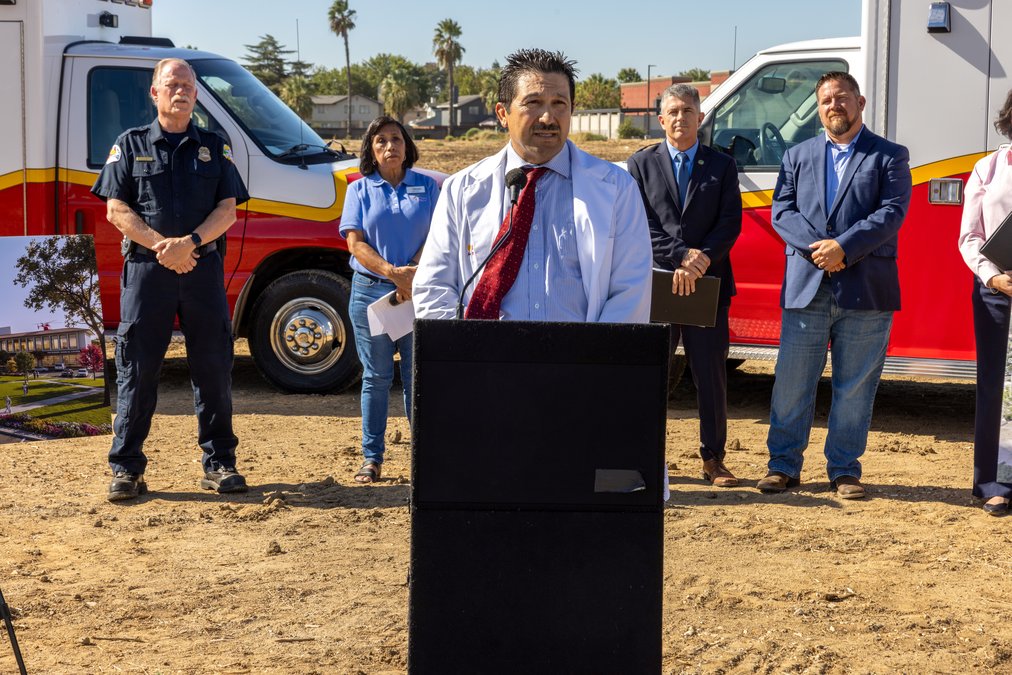
Dr. Karin Freese, chief executive officer of Del Puerto Health Care District, said the need for local emergency access remains unchanged.
“Patterson families still have no emergency room close to home,” Freese said. “Our commitment to Patterson doesn’t end with this bill, and we’ll keep working to find a path forward for emergency care on the West Side.”
Stanislaus County Supervisor Channce Condit called the veto a setback but said local leaders will continue pushing for expanded emergency services and a permanent hospital.
AB 2282 passed the Assembly unanimously and received broad bipartisan support in the Senate. Alanis said he plans to reintroduce the bill next year.