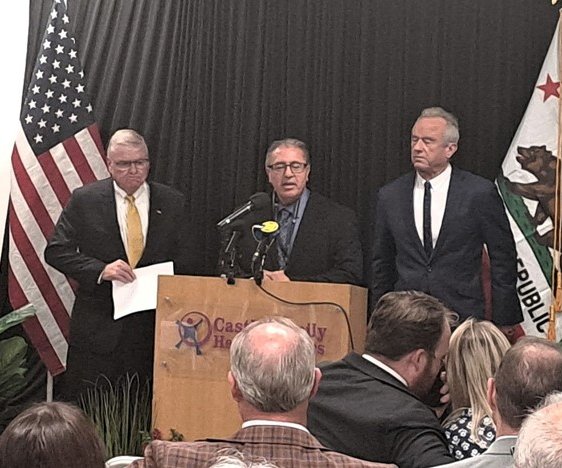
With the number of older Californians experiencing homelessness rising at unprecedented rates, the California Commission on Aging convened its annual information hearing on June 11 to examine gaps in supportive housing and explore potential solutions.
The hearing, titled “Nowhere to Go: Addressing the Crisis in Supportive Housing for Older Californians,” brought together county officials, state agencies, nonprofit leaders and individuals with lived experience across four panel discussions. Speakers highlighted barriers to housing, capacity shortages, regulatory and financial challenges, and progress made under existing programs.
According to a 2023 University of California, San Francisco report, nearly half — 48% — of single adults experiencing homelessness in the state were age 50 or older, compared with just 11% in 1990.
“California’s population is rapidly aging, but our supportive housing systems have yet to catch up,” said David Lindeman, chair of the California Commission on Aging. “This hearing was an important first step in identifying ways to improve our existing programs and services to meet the housing needs of our state’s most vulnerable residents.”
Panelists noted that older adults face unique obstacles when trying to exit homelessness, including housing discrimination, limited income and age‑related health issues that make navigating shelters and traditional supportive housing more difficult.
“Our minds and bodies change as we age, in ways that unfortunately, our state’s current shelters and supportive housing systems are not designed to support,” said Jeannee Parker Martin, a commissioner and president and CEO of LeadingAge California. “This forum presented a unique opportunity to address this challenge and create new, more resilient systems that serve all Californians, regardless of age or disability status.”
While programs designed to rehouse older adults have shown strong results, the state lacks sufficient supportive housing to meet growing demand, panelists said.
This year’s hearing was the commission’s second annual information session. Its inaugural hearing in May 2025 focused on emergency preparedness and the disproportionate impact of the Los Angeles wildfires on older adults.
“Natural disasters take an incredible toll on our communities — especially older adults, who may not be in a position to safely evacuate,” said Karol Swartzlander, the commission’s executive director. “While we may not think of homelessness in the same way we think of natural disasters, the impact of homelessness on our aging population can be just as — if not more — devastating.”
The commission plans to release a report summarizing its findings, along with a policy brief recommending local and state actions to strengthen homelessness prevention, mitigation and response strategies for older adults.
The California Commission on Aging, established under the Older Californians Act, serves as the state’s principal advocacy body for older residents. Its 18 volunteer commissioners represent California’s racial, ethnic and geographic diversity and advise state leaders on programs and services affecting older adults.