LOS BANOS — Local, state and federal officials last week celebrated the completion of the Los Banos Creek Detention Dam Project, a $5.5 million upgrade designed to improve water reliability, groundwater recharge and flood protection in western Merced County.
The project modernizes operations at the Los Banos Creek Detention Dam, which captures flows from the intermittent creek that begins in the Diablo Range in San Benito County. The dam, built in 1966 by the U.S. Bureau of Reclamation, was originally constructed to detain floodwater and protect the San Luis Canal, Delta‑Mendota Canal, the city of Los Banos and surrounding agricultural areas.
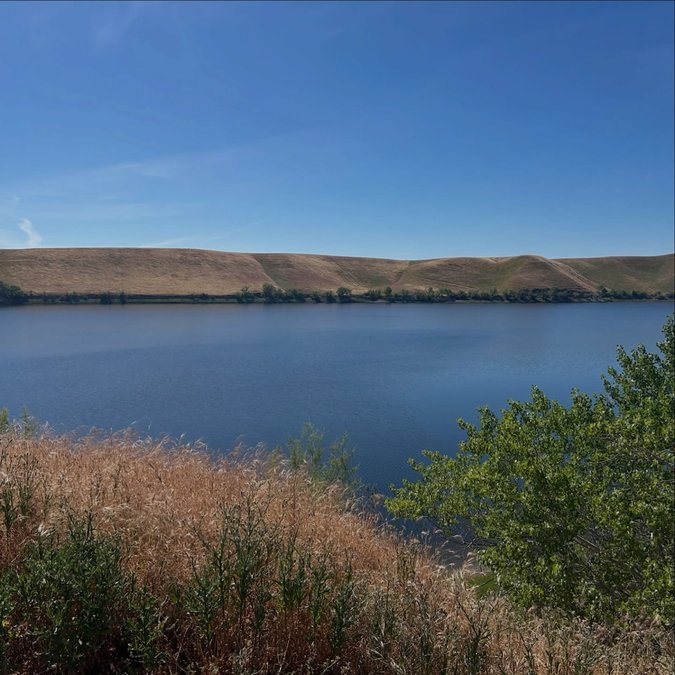
The reservoir, with a capacity of 34,000 acre‑feet, is jointly owned by Reclamation and operated by the California Department of Water Resources. Water released from the facility supports crop production, wetlands, waterfowl habitat and riparian ecosystems.
According to project documents, the completed work allows the reservoir to operate as both a flood‑control facility and a managed water storage system. Improvements include new pipeline connections, control valves, a fish screen, road crossings and discharge features.
Under the updated operations plan, roughly 8,000 acre‑feet of water may be released from the dam between late fall and early spring to increase natural flows in Los Banos Creek. Project partners — including the San Joaquin River Exchange Contractors Water Authority, San Luis Water District and Grassland Water District — would then refill the reservoir with replacement water from other sources, such as groundwater, during off‑peak periods.
Officials say the approach increases the net amount of water that can be stored and released annually, improves groundwater recharge as water moves through the creek, and provides more reliable supplies for agriculture, wildlife refuges and the Grasslands Ecological Area.
“This project helps bring more water to our communities, refills groundwater, reduces flood risk, and supports local farms and the Grasslands Ecological Area,” Sen. Anna Caballero said in a statement. “It shows what we can do when we work together to protect our Valley’s water future.”
Assemblymember Esmeralda Soria said the project strengthens water security for the region. “Water reliability isn’t just an agricultural issue, it’s an issue that impacts entire communities,” she said.
Planning for the modifications dates back more than a decade, with environmental review completed in 2024. Construction occurred between late 2025 and spring 2026.
Participating agencies include the Bureau of Reclamation, California Department of Water Resources, California Department of Parks and Recreation, Central California Irrigation District and the Exchange Contractors.
Officials say the project enhances long‑term water management while maintaining the dam’s original flood‑control purpose.