West Nile virus activity is climbing across the Northern San Joaquin Valley, and public health officials say the Westside is facing one of its most active seasons in years, with confirmed human cases in both Stanislaus and Merced counties and an aggressive invasive mosquito species adding new challenges for local abatement crews.
Stanislaus County Public Health confirmed the first human case of West Nile virus on Aug. 24, noting that statewide activity is at a five‑year high. Four days ago, the Turlock Mosquito Abatement District issued an update reporting three additional neuroinvasive cases including one in Newman, all requiring hospitalization. Merced County announced its first human case on Sept. 2 in Planada.
For Westside communities — including Newman and Crows Landing, served by the Turlock Mosquito Abatement District, and Gustine, served by the Merced County Mosquito Abatement District — the warnings come as mosquito counts and positive samples continue to rise.
“Current surveillance indicators signal a severe West Nile virus season for 2026 with concern for a higher number of human cases,” said Dr. Thea Papasozomenos, Stanislaus County’s public health officer. “Because there is no vaccine or specific treatment for West Nile virus, it is important for people to take steps to protect themselves and their families from mosquito bites.”
West Nile virus typically peaks in August and September, and officials say this year’s activity is following that pattern — but at a higher intensity.
Merced County’s mosquito district has detected 76 positive mosquito samples, nearly double an average season, along with positive birds, a horse and one human case. Positive mosquitoes have been found in Gustine, Los Banos, Hilmar, Delhi, Livingston, Atwater, Merced and other communities.
“This is not the time to let your guard down,” Merced County officials said in their release. “Mosquitoes active at dusk and dawn can transmit West Nile virus.”
Stanislaus County has reported five human cases, as of Friday, along with 120 positive mosquito samples and one horse that tested positive for the virus.
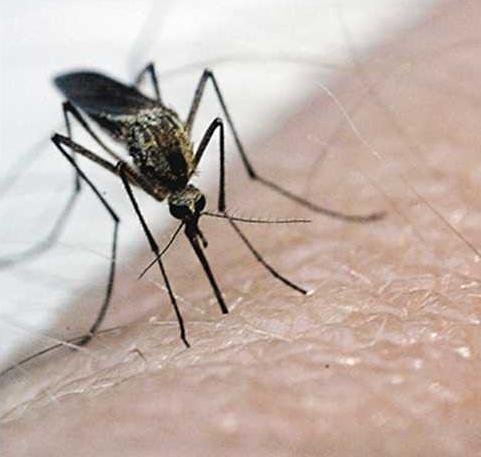
Complicating the season is the spread of Aedes aegypti, an invasive mosquito species that has taken hold in Newman and other parts of the region. Unlike the Culex mosquitoes that spread West Nile virus, Aedes aegypti does not transmit WNV — but it does carry diseases such as Dengue, Zika and Chikungunya.
And it bites differently.
“They won’t just land on your forearm like an ordinary dumb mosquito,” said David Heft, general manager of the Turlock Mosquito Abatement District. “These mosquitoes will land on the back sides of your arms, your elbows, your ankles. By the time you feel them, they’ve already flown off.”
Heft said the species is “very aggressive” and thrives both indoors and outdoors, staying within about 300 feet of where it hatched.
To combat the growing population, the district is experimenting with releasing sterile male mosquitoes, a technique used in other regions to suppress invasive species.
“If we can release enough sterile males into the population, they’ll mate with females, the females will lay their eggs, but they won’t hatch; they’ll be duds,” Heft said. “Over time, this could have a major impact on the population. But we have to continue to monitor it very closely.”
Prevention remains the strongest defense
With no vaccine or specific treatment for West Nile virus, officials continue to emphasize personal protection:
- Use EPA‑registered insect repellent containing DEET, Picaridin or Oil of Lemon Eucalyptus.
- Wear long sleeves and pants during dawn and dusk.
- Dump and drain standing water weekly — including buckets, birdbaths, flowerpots, pet bowls and tires.
- Maintain swimming pools or report neglected ones to local districts.
- Ensure window and door screens fit tightly and are free of holes.
“Buy an insect repellent that has DEET,” Heft said. “These mosquitoes have evolved to bite humans; they’re very aggressive and they’re going to find you. So put on some repellent and give us a call.”
With temperatures still warm and mosquito activity remaining high, officials say Westside residents should expect continued detections in the coming weeks.
“Now is the time to make and use your summertime plan to protect you and your family,” Papasozomenos said.
Public health officials and mosquito districts on both sides of the county line say they will continue surveillance, ground and aerial treatments, and public outreach — but emphasize that community participation is essential.
“Don’t wait,” Merced County officials said. “Protect yourself from mosquito bites every time you head outside.”
Joe Cortez contributed to this article.
Where Westside residents can report issues
Stanislaus County (Newman, Crows Landing):
- Turlock Mosquito Abatement District: (209) 634‑1234
Merced County (Gustine):
- Merced County Mosquito Abatement District: (209) 722‑1527
Dead birds — a key indicator of West Nile virus activity — can be reported to the California West Nile Virus Hotline at 1‑877‑WNV‑BIRD or online at westnile.ca.gov/report.