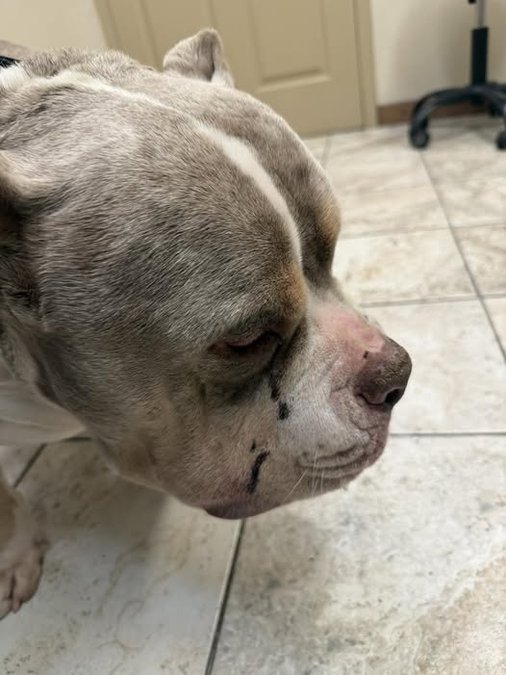
GUSTINE — A Schmidt Road family is urging Westside residents to stay alert after a rattlesnake appeared on their back patio last week and bit their dog, Poncho — a rare but timely reminder that rattlesnake season is underway across the region.
Homeowner Julie Xavier said she stepped onto her patio Wednesday evening when she heard what she thought was air leaking from an outdoor sink. As she moved closer, the sound intensified.
“When I got within about three feet, I realized it wasn’t the sink — it was a rattlesnake coiled right next to it,” Xavier said.
The family did not witness the bite, but they believe the snake came from the pasture bordering the west side of their patio. Poncho, who spends most of his day lounging on the concrete, likely encountered the snake moments before Xavier walked outside.
Within 5 to 10 minutes, Poncho began showing symptoms of a venomous bite. Xavier rushed him to an emergency veterinarian, where staff confirmed a rattlesnake strike.
Veterinarians administered one dose of antivenom and monitored Poncho’s bloodwork overnight. When he returned home, his face and neck were severely swollen — but the swelling has since subsided.
“We panicked. I had never experienced anything like this and were worried we might lose him,” Xavier said. “Getting him to the vet quickly made all the difference.”
Poncho, a stray the family adopted two years ago, is now “back to his old self,” Xavier said.
While Xavier has lived on Schmidt Road for 27 years without ever seeing a rattlesnake on her property, the timing of the encounter aligns with the start of peak rattlesnake activity in the Central Valley.
Wildlife officials say rattlesnakes become more active from April through October, especially in rural areas, like western Stanislaus and Merced counties, where open fields, canal banks and pastureland provide ideal habitat. The Northern Pacific rattlesnake, the species most commonly found in this region, is widespread in the Diablo Range foothills and often moves into valley properties in search of food and shade.
Local animal control agencies report that sightings typically increase after warm spells, when snakes leave their winter dens to hunt rodents. While rattlesnakes generally avoid people, they will defend themselves if startled — especially when coiled in shaded areas near patios, sheds or tall grass.
Xavier said she has not heard of other rattlesnake encounters among her neighbors, though she has noticed more wildlife in recent months, including foxes and an eagle.
After Poncho’s bite, the family began making changes around their property, including cutting back the grass line, clearing out areas where snakes might nest, wearing boots while outdoors and staying more alert when working around the yard.
Xavier said they are not currently working with animal control or wildlife services but would consider it if another snake appears.
She hopes their experience serves as a warning for other Westside residents.
“I would stress being more observant given the recent changes we’re seeing with wildlife,” she said. “And if your pet is bitten, get them to a veterinarian as quickly as possible.”
Statewide data from the California Poison Control System shows rattlesnake‑related calls climb sharply from April through October, with activity typically peaking in late spring and early summer. On the Westside, that surge lines up with rapid warming after cool mornings, tall seasonal grasses that offer cover, increased rodent movement around farms and canal banks, and more outdoor activity by residents and pets. Biologists say drought cycles, wet winters and sudden temperature swings can all influence how early snakes emerge, noting that in some years warm spells have pushed rattlesnake activity into March.
The western edges of Stanislaus and Merced counties sit at the transition between valley farmland and the foothills — prime rattlesnake territory. Open rangeland, irrigation canals, pasture fencing, equipment yards and shaded patios create a patchwork of micro‑habitats where snakes can hunt, hide and regulate their body temperature. Experts emphasize that rattlesnakes are not aggressive and typically strike only when startled or cornered, such as when a person or pet unknowingly gets too close.
Wildlife experts recommend:
- Keep yards trimmed and free of debris
- Avoid reaching into shaded or hidden areas
- Supervise pets outdoors
- Stay on clear paths when walking
- Never attempt to kill or handle a rattlesnake
- Seek immediate medical or veterinary care after a bite
As temperatures rise, so do encounters — and Poncho’s close call is a reminder that even longtime residents can be caught off guard.