
For author Angela Costa Simoes, the story of Queen Saint Isabel and the Miracle of the Roses is more than a legend — it is a thread woven through her family, her faith and the Portuguese community she grew up in.
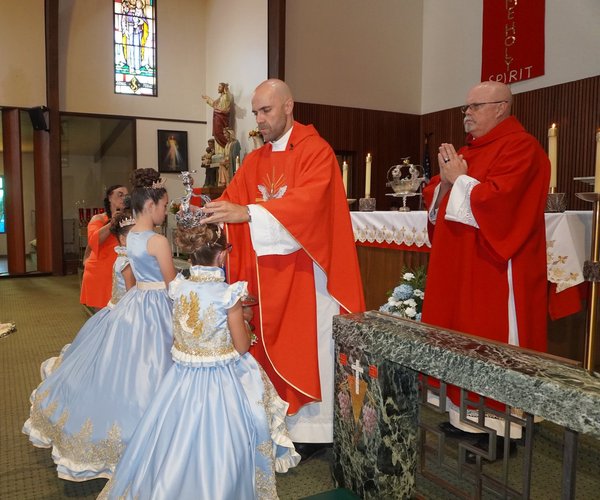
Simoes, who was raised deeply involved in California’s Portuguese traditions, said the idea for a children’s book about Queen Saint Isabel came naturally. From attending Holy Ghost festas to marching in parades, carrying the rosary, serving as a side maid and eventually being crowned queen, she said those experiences shaped her connection to the story.
“Through those experiences, I always knew the story of Queen Saint Isabel and the Miracle of the Roses,” Simoes said.
Her book is part of the Riso Books heritage collection, which focuses on preserving Portuguese legends, traditions and cultural stories for young readers. Simoes said Queen Saint Isabel felt like the right choice because many children still participate in festas today, but not all know the history behind the crowns, rituals and celebrations.
“I wanted to create a book that would help young readers understand the remarkable woman behind those traditions and introduce them to a story that has shaped Portuguese culture for centuries,” she said.
Publishing the book in both Portuguese and English was essential, Simoes said, because preserving the language is one of Riso Books’ core missions. Many Portuguese‑American families are trying to maintain their connection to the language while living in multilingual households.
“Bilingual books allow children, parents, grandparents and extended family members to learn together,” she said. “They make Portuguese more accessible, even for those who may not speak the language fluently.”
As a third‑generation Portuguese American, Simoes said she understands how difficult it can be to strengthen language skills later in life. Books written in both languages help build those connections early while keeping cultural stories and values accessible for future generations.
Her own heritage shaped every part of the project. Portuguese culture, she said, was never something she learned from a distance — it was part of her everyday life. Festas, family traditions, Portuguese halls and community events all helped form her identity.
Because of that connection, Simoes approached Queen Saint Isabel not only as a historical figure, but as someone whose story has lived within the Portuguese community for generations.
“I wanted children to see her not only as a queen from long ago, but as someone whose values of kindness, charity, faith and service still matter today,” she said.
While the Miracle of the Roses is the most well‑known part of Saint Isabel’s story, Simoes said her research highlighted the queen’s lifelong commitment to helping others. Saint Isabel devoted her life to charity, opened hospitals and schools, cared for the poor and even helped prevent wars through diplomacy.
Simoes said she hopes young readers — especially Portuguese‑American children — feel proud of their heritage and inspired by Saint Isabel’s example.
“I hope children come away understanding that kindness, generosity, forgiveness and peacemaking are powerful qualities,” she said. “In a world that often feels divided, Queen Saint Isabel reminds us that one person can make a meaningful difference through compassion and service.”
Writing the book required balancing faith, culture, history and family tradition in a way children could understand. Simoes said one of the biggest challenges was presenting the queen’s complex life in a way that remained accessible while still honoring the spirit of the story.
She focused on universal themes — kindness, helping others, standing up for peace and caring for the community. Some historical details were simplified, and illustrations were used to help young readers connect with key moments.
“At the same time, I wanted to preserve the cultural and faith traditions that make her story so important to Portuguese communities around the world,” she said.
For families in the Portuguese diaspora, Simoes said books like The Miracle of the Roses help keep traditions alive. Stories, she said, are one of the most powerful ways culture is passed from one generation to the next.
As generations grow further removed from Portugal, she said there is a risk that traditions and stories could fade. Books help bridge that gap, giving families a way to share language, history, faith and cultural identity.
“For Portuguese‑American families especially, books like The Miracle of the Roses help transform traditions from something children simply participate in into something they truly understand,” Simoes said. “When children know the stories behind the traditions, those traditions become more meaningful and much more likely to be carried forward for generations to come.”