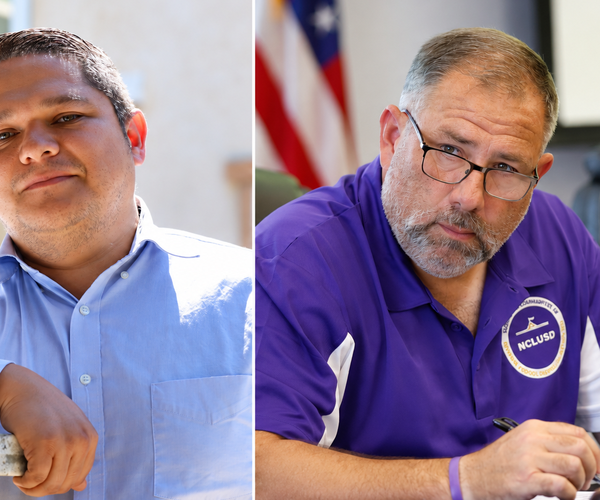

Newman-Crows Landing Unified School District agreed to new bargaining agreements with two union organizations following 5-0 vote from the Board of Trustees on June 15.
The unions, Newman-Crows Landing Teachers Association and California School Employees Association Chapter 551, agree to contract for the 2025-26 school year. A contract for the 2026-27 school year has not been ratified.
NCLTA and CSEA will each see a 3% salary increase. NCLTA will also receive an increase in coaching stipends with the highest being a 4.5% increase for a head coach.
Initially, CSEA agreed to a 1.5% increase in the condition to prevent one staff position from layoffs, according to Assistant Superintendent Jessie Ceja. However, the union’s contract includes a “me-too” clause, which reopens negotiations if a certificated bargaining unit or classified and certificated managers’ groups receive a higher increase in salary, stipends or benefits.
“Since we have the teachers some increases in coaches’ stipends, we agreed with CSEA that [the] position that they were looking to have come back … we weren't going to take it from the raise,” Ceja said.
Salaries have been a contentious topic for both unions. In an October 2025 board meeting, NCLTA President María Andrade and CSEA then-leading negotiator Brittney Clark expressed their respective union’s concerns that salaries are insufficient to cover rising costs such as healthcare coverage to the trustees.
Elsa Rodriguez Juarez, a teacher at Yolo Middle School and vice president for NCLTA, said a salary increase was “one of the non-negotiables.” Without a competitive salary, the district can not attract and retain “highly-educated teachers,” she added.
“There’s always to make sure we’re competitive with other districts around us, so we definitely look at issues that affect our ability to do our job effectively, which includes compensation and working conditions,” Rodriguez said.
NCLTA’s new agreement also ratified changes from the 2024-25 contract such as the language for preparation periods, extracurricular activities and retirement incentives. For class sizes, a new provision was added where there will be an effort to balance K-5 classroom sizes based on teachers’ input and extenuating circumstances will depend on “concerns for a student’s physical, emotional or physical well being.”
Rodriguez said the union wanted to solidify the elementary school teachers’ recommendations when planning out different classrooms. “We need to look at exactly the right fit for all students, which is going to be the best for everyone in the room,” she said.
The CSEA’s contract added a new section regarding technology and artificial intelligence use. Some of the provisions include human review on decisions made solely by AI, a 60-day notice if NCLUSD considers adding new technology that affects an employee’s employment and the use of video cameras to not violate the privacy and protected rights of employees.
CSEA President Claudia Diaz said the union bargained for AI provisions to make sure they’re protected from being replaced by its use.
“We want to make sure it can’t be used against us,” Diaz said. “AI is so advanced now that it’s hard to tell what’s real and what’s not.”
While negotiations for the 2026-27 agreements aren’t underway, healthcare benefits will be a central point for both organizations. In NCLTA’s new agreement, NCLUSD will contribute $9,475 annually to full-time employees on dependent coverage. In the CSEA’s 2024-2027 contract, full-time employees on dependent coverage receive $11,715 per year from the district.
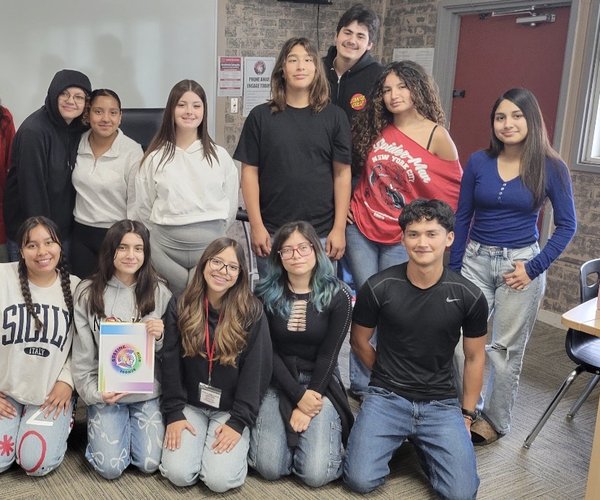
The subject was amplified when Richard Barrera, a running candidate for California State Superintendent of Public Institutions, visited Yolo Middle in May. In a discussion with Barrera, multiple district employees expressed their concerns over the rising cost of insurance premiums. Oscar Madrigal, a Spanish teacher at Yolo Middle, told Barrera that half of his colleagues’ paychecks are allocated towards their insurance.
During the recent negotiations, Rodriguez said the salary increase was not applied towards benefits because the district is looking at more affordable options for its employees. She added there will be “more clarity as to what the district is doing in terms of health benefits” in the fall.
Diaz said there needs to be more accessibility to better health benefits to cover expenses for emergencies such as a doctor’s visit. “If we’re not able to cover our dues, how are we going to get to the doctor?”