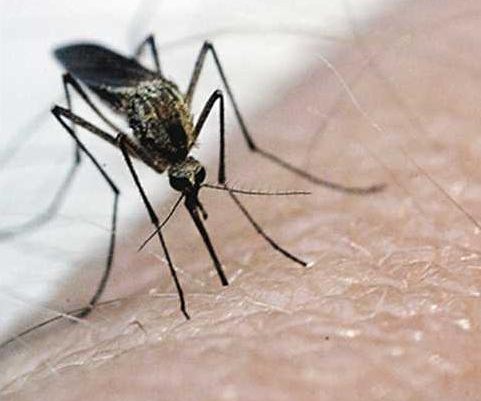
MERCED — West Nile virus has been detected in Merced County for the first time this year, prompting renewed warnings from mosquito abatement officials as summer conditions drive mosquito activity across the Central Valley.
The Merced County Mosquito Abatement District confirmed that a mosquito sample collected July 6 in Planada tested positive for the virus. The finding marks the first detection of the 2026 season in Merced County. As of July 10, West Nile virus activity has been reported in 25 California counties, with 433 positive mosquito samples, 178 dead birds, one infected horse and two human cases statewide.
“West Nile virus is here, and we need the public to take it seriously,” said Rhiannon Jones, executive director of the Merced County Mosquito Abatement District. “The best protection is staying aware of local risk levels, wearing repellent, and eliminating standing water around your house.”
West Nile virus is spread through the bite of an infected mosquito. Most people experience no symptoms, but about one in five develop fever, headaches, joint pain, rash or fatigue, according to the Centers for Disease Control and Prevention. Fewer than 1 percent develop severe neurological complications such as meningitis or encephalitis, which can be fatal, particularly for adults over 50 or those with underlying health conditions. There is no vaccine or antiviral treatment.
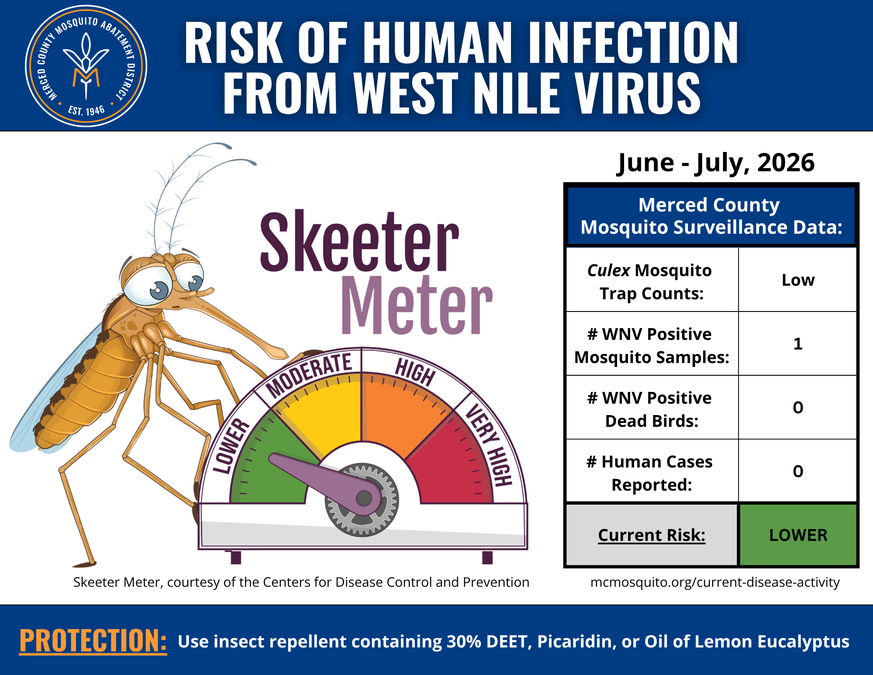
The district encourages residents to follow the monthly Skeeter Meter, a local risk‑awareness tool developed with the CDC that uses surveillance data to show current West Nile virus risk levels in Merced County.
Officials in both Merced and Stanislaus counties are urging residents to eliminate standing water, which provides ideal breeding sites. Unmaintained swimming pools remain a major concern in urban areas.
Recommended prevention steps include:
- Dumping or draining standing water from containers, birdbaths, buckets and pet bowls.
- Maintaining or treating swimming pools; assistance is available at no cost.
- Avoiding stagnant agricultural water for more than three days.
- Wearing EPA‑registered repellents containing DEET, Picaridin or Oil of Lemon Eucalyptus.
- Limiting outdoor activity at dawn and dusk.
- Keeping window and door screens in good repair. • Reporting neglected pools or mosquito hotspots.
Dead birds — an early indicator of West Nile activity — can be reported to the California hotline at 1‑877‑WNV‑BIRD or online at westnile.ca.gov/report.
Residents in Gustine and Santa Nella should contact the Merced County Mosquito Abatement District at (209) 722‑1527. Residents in Newman and Crows Landing should contact the Turlock Mosquito Abatement District at (209) 634‑1234. Both districts provide services at no cost.
Officials expect mosquito activity and virus detections to increase through the summer.